More than beautiful wings, butterflies and moths are essential links in Peace Valley’s web of life.
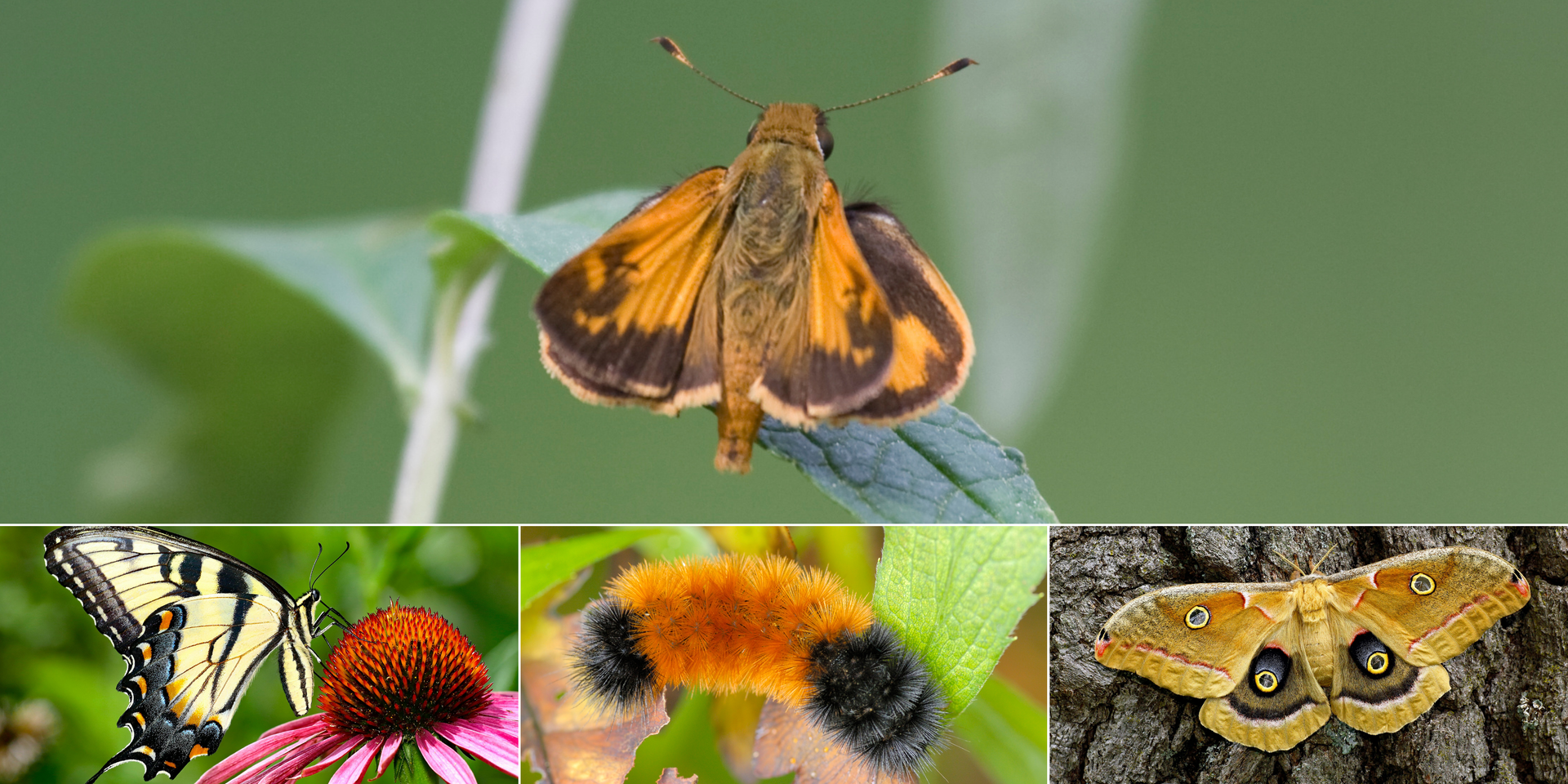
It’s easy to notice a bright orange Monarch floating over a meadow or a swallowtail visiting a summer wildflower. But for every butterfly that catches your eye, there may be dozens of other members of the same insect order hiding beneath leaves, resting against tree bark, or waiting until darkness to take flight. Butterflies and moths are all around us—and there’s much more to them than beautiful wings.
As summer continues, butterflies and moths become increasingly noticeable around Peace Valley Nature Center. These insects belong to the order Lepidoptera and play an important role in our native ecosystems. They help pollinate many flowering plants, while their caterpillars provide an essential food source for breeding birds and their young. Together, butterflies and moths are important links in the food web and indicators of the biodiversity within an ecosystem.
But with so many different species flying, crawling, and hiding around Peace Valley, how can you tell what you’re looking at?
Butterfly or Moth?
While butterflies and moths are often thought of very differently—butterflies associated with warm weather and flowers, moths are perhaps best known as the culprits that chew holes in clothes—they are actually close relatives. Around 100 million years ago, butterflies diverged on the evolutionary tree from their moth ancestors, eventually developing traits and behaviors that distinguish the two groups today.
So, what makes a butterfly different from a moth? There are a few clues.
One major behavioral difference is the time of day they are typically active. Butterflies are commonly seen nectaring and laying eggs during daylight hours, while many moths are active at night. This transition to daytime activity helped butterflies take advantage of flowering plants and the nectar resources available during the day.
Another telltale clue is the antennae. Many moths have feathery or otherwise elaborate antennae that help them detect chemical cues, including pheromones produced by potential mates. Butterflies generally have slender antennae ending in distinctive club-shaped tips. Butterflies also tend to rely heavily on vision, and their often-bright colors can play a role in attracting mates, warning predators, or identifying members of their own species.
Other clues can include resting position, coloration, body shape, and pupa formation. Nature, however, rarely follows simple rules, and there are exceptions—which make identifying Lepidoptera part of the fun.
Fortunately, Peace Valley provides plenty of opportunities to put those identification skills to work.
Species at Peace Valley Nature Center
There are around 2,500 species of moths and butterflies in Pennsylvania, and 162 species have been documented by visitors at Peace Valley Park.
Our most frequently sighted Lepidoptera is the Zabulon Skipper (Poanes zabulon). This small, fuzzy butterfly might initially be mistaken for a moth because of its earthy tones and stout, fuzzy body, but it belongs to the skipper family of butterflies. The species has adapted well to developed environments and relies on a variety of grasses as host plants for its caterpillars.
A close second is the familiar Monarch (Danaus plexippus). Its striking orange-and-black wings provide warning coloration, while its extraordinary migration sets it apart from most other Lepidoptera. Monarchs may travel thousands of miles during their annual migration.
The most documented moth is the Eastern Tent Caterpillar Moth (Malacosoma americanum). This species is perhaps better known during its larval stage, when groups of caterpillars work together to construct conspicuous silk tents in trees before eventually forming cocoons and transforming into adult moths.
Other commonly observed species include the Eastern Tiger Swallowtail (Papilio glaucus), Little Wood Satyr (Megisto cymela), Isabella Tiger Moth (Pyrrharctia isabella), Red-Spotted Admiral (Limenitis arthemis), and non-native Cabbage White (Pieris rapae).
And there may be plenty more waiting to be discovered. Of the 162 species documented at Peace Valley, 83 have been recorded only once. That means the butterfly or moth you stop to photograph could provide an important new observation—or perhaps even add another species to our list.
Finding and documenting them is one way to help. Creating habitat for them at home is another.
What You Can Do
Like many other pollinators, butterflies and moths face pressures from habitat loss, climate change, pesticide use, and the disappearance of native host plants. Fortunately, even small changes at home can provide valuable habitat.
Consider:
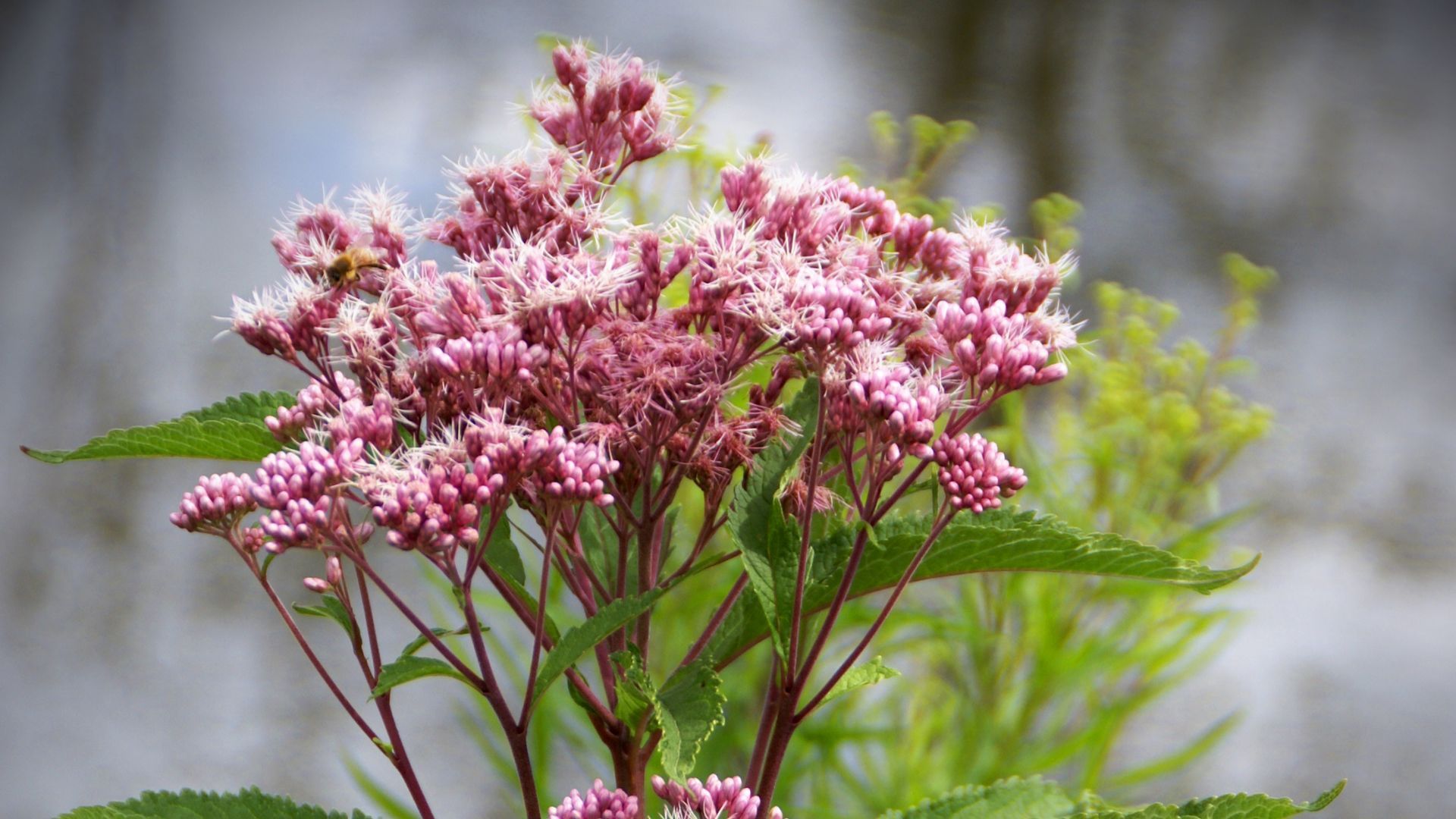
- Planting native host and nectar plants. Host plants provide the food that caterpillars need to develop, while flowering plants provide nectar for adults. Good choices include Common and Swamp Milkweed (Asclepias syriaca, A. incarnata), Purple Coneflower (Echinacea purpurea), native asters (Symphyotrichum spp.), Mountain Mints (Pycnanthemum spp.), Beebalm (Monarda fistulosa), Black-eyed Susan (Rudbeckia hirta), and native goldenrods (Solidago spp.). Sweet Joe-Pye Weed (Eutrochium purpureum) is also a favorite of visiting butterflies, including Eastern Tiger Swallowtails.
- Reducing pesticide use. Insecticides can kill the very caterpillars and adult insects you’re trying to attract, while herbicides can eliminate important host and nectar plants. Reducing or eliminating pesticide use helps create a more butterfly- and moth-friendly landscape.
- Adding simple habitat features. Sunny rocks provide places for butterflies to bask, while damp soil or sand can provide minerals and moisture through a behavior known as “puddling.” Some butterfly enthusiasts even use overripe fruit to attract fruit-feeding species.
Look a Little Closer
Supporting butterflies and moths starts with noticing them—and sometimes that means looking beyond the colorful adults visiting flowers. Check the underside of a milkweed leaf for a tiny Monarch egg. Look for a caterpillar feeding on an oak or grass. Examine a bare branch for an overwintering cocoon or take a closer look at what appears to be a piece of bark—it just might be a perfectly camouflaged moth.
Each observation helps reveal how these insects depend on the plants and habitats around them. Photograph what you find and share your observations through iNaturalist and Peace Valley Nature Center’s community science projects. With more than 150 species already documented here—and many recorded only once—your next walk could contribute something new to what we know about the butterflies and moths of Peace Valley.